Debrief.
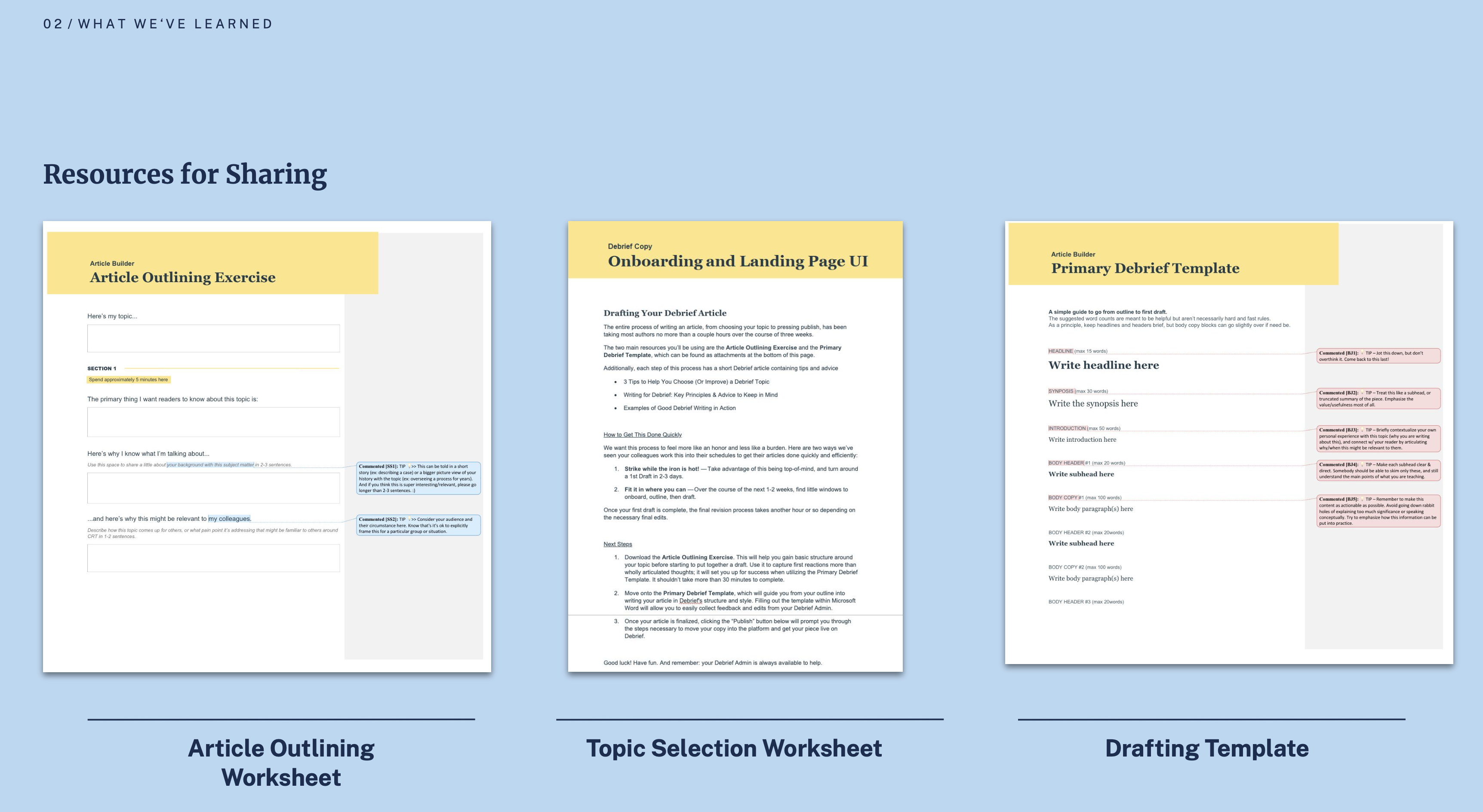
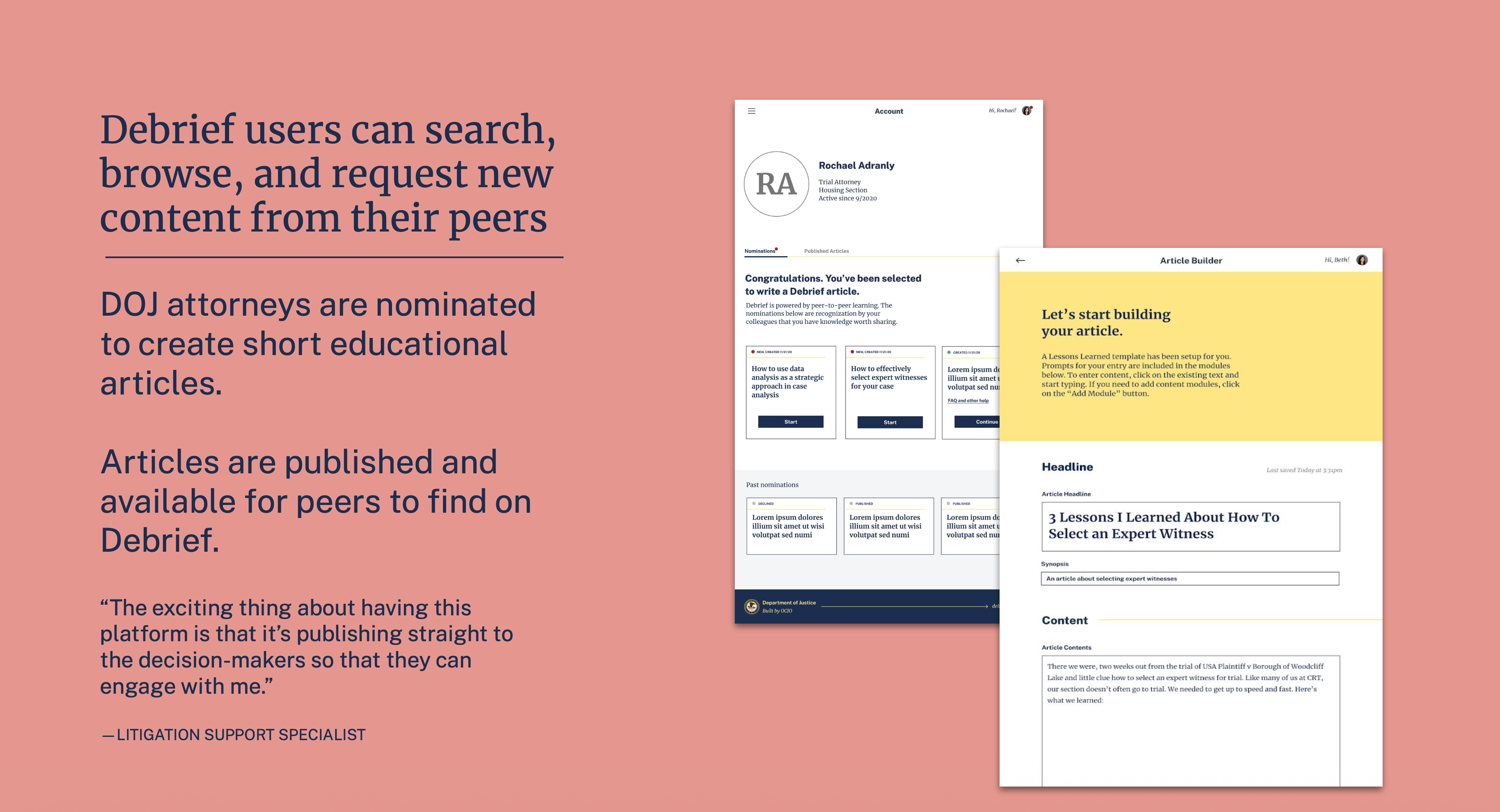
An internal technology platform that helps DOJ prosecutors build new data and technology skills. The platform – called Debrief – enables federal prosecutors to exchange short, human stories about the tools and methods they are actually using, then makes it easy for real-world connection to happen as follow-up.
The DOJ's Office of the Chief Information Officer, in partnership with the Civil Rights Division.
I led the client relationship across a multi-year engagement, frequently navigating intense moments of innovation ambiguity in an extremely risk-averse culture. I also worked hard to keep our IDEO innovation team creatively motivated amidst the federal bureaucracy and the technology constraints of the Drupal content management system on which we had to build the entire platform.
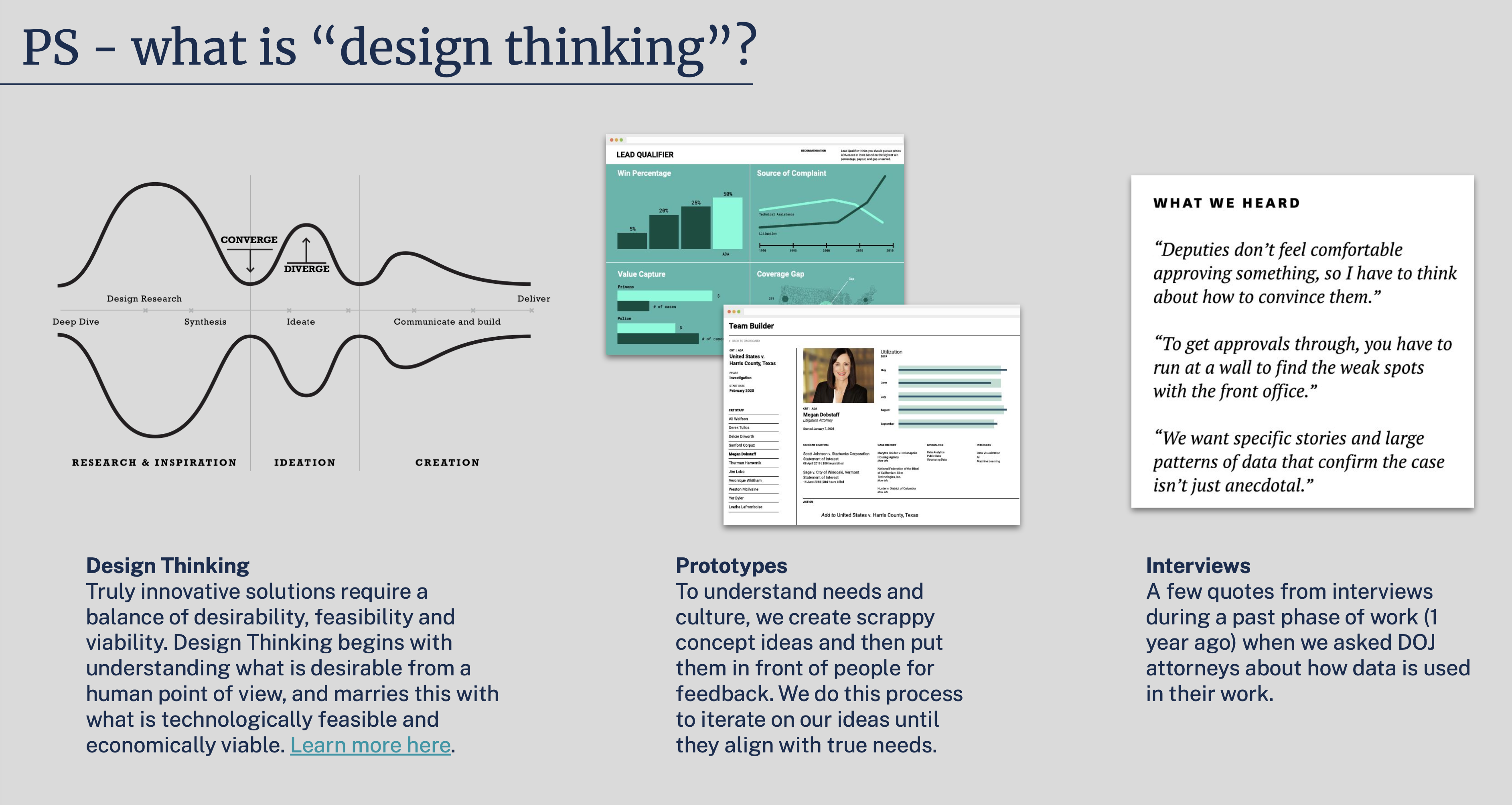
During our early research interviews with DOJ lawyers, we surfaced the core principle on which Debrief was based: when it comes to learning new skills, DOJ attorneys trust their peers more than they trust software vendors or technical staff. In many instances, the messenger mattered even more than the content. We were also able to help the DOJ with a big cultural shift on the platform, moving from an institution of long documents and five-round review cycles, toward a format that was short, human, and casual without being unprofessional.
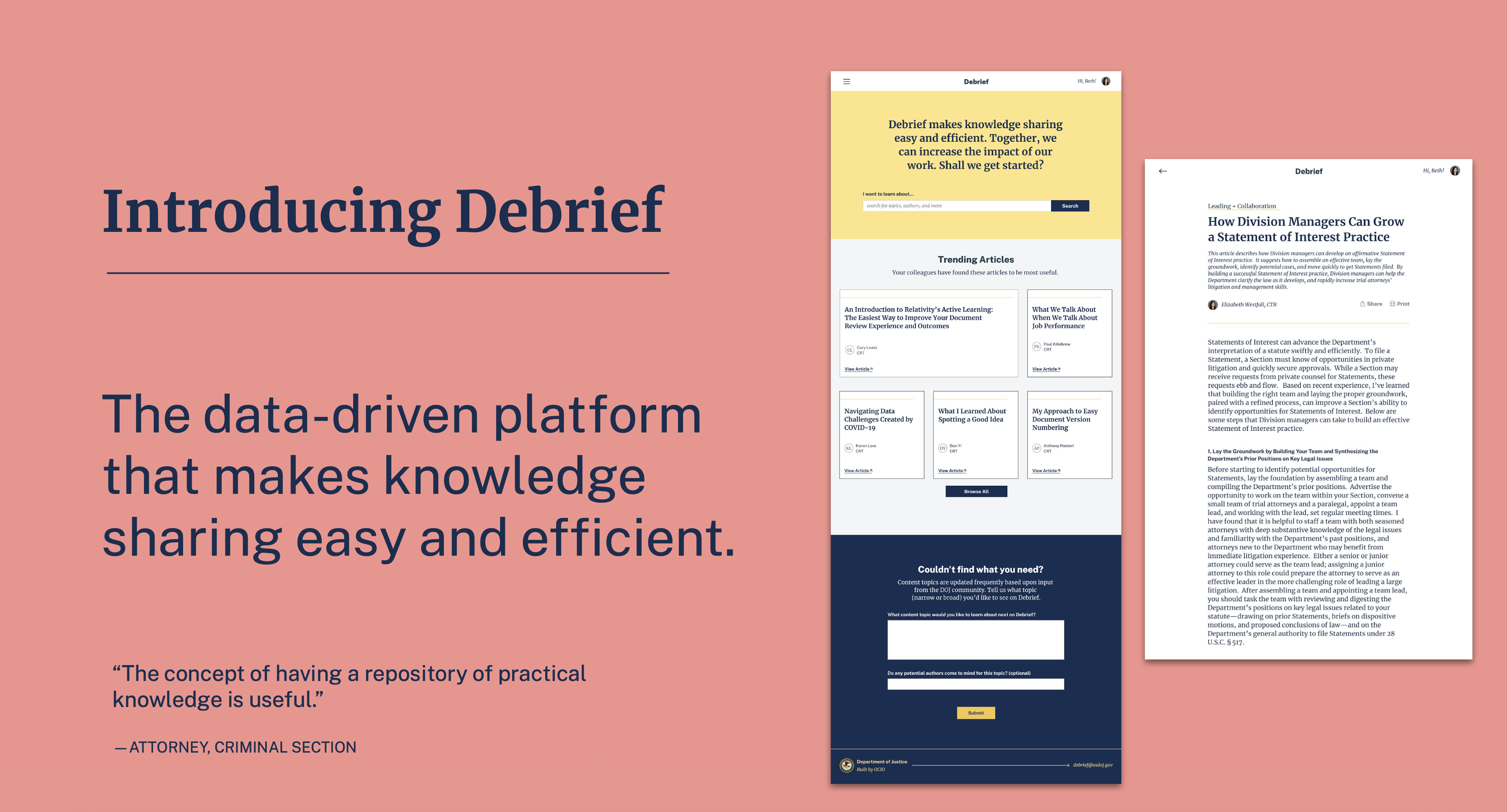
Debrief launched across the Civil Rights Division, with plans to scale across more DOJ components. It was also accidentally well-suited to the pandemic, which hit mid-build and turned a knowledge-exchange platform originally focused on catalyzing in-person connection into a tool that enabled organic information exchange even in a 100% remote-work environment.