Acme Labs, an AmLaw 100 Innovation Model.
A complete operating model for an innovation lab inside an AmLaw 100 firm, including a playbook for sourcing and piloting new ideas, a balanced innovation portfolio strategy, and a staffing model where lawyers work alongside technology and design experts.
A large AmLaw 100 law firm, in collaboration with a senior partner and a senior knowledge management leader at the firm. As part of the engagement, we also worked closely with firm and practice group leadership.
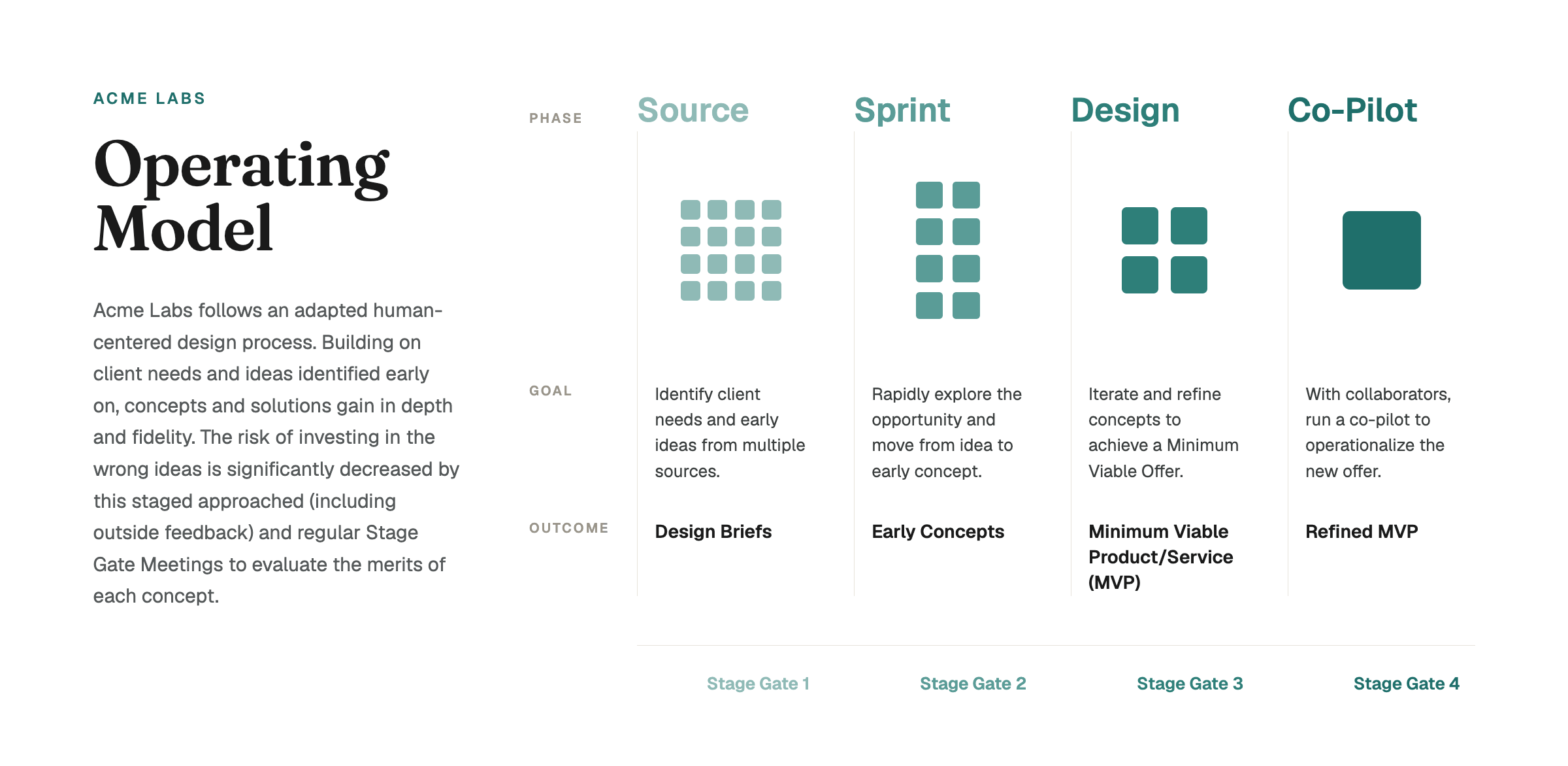
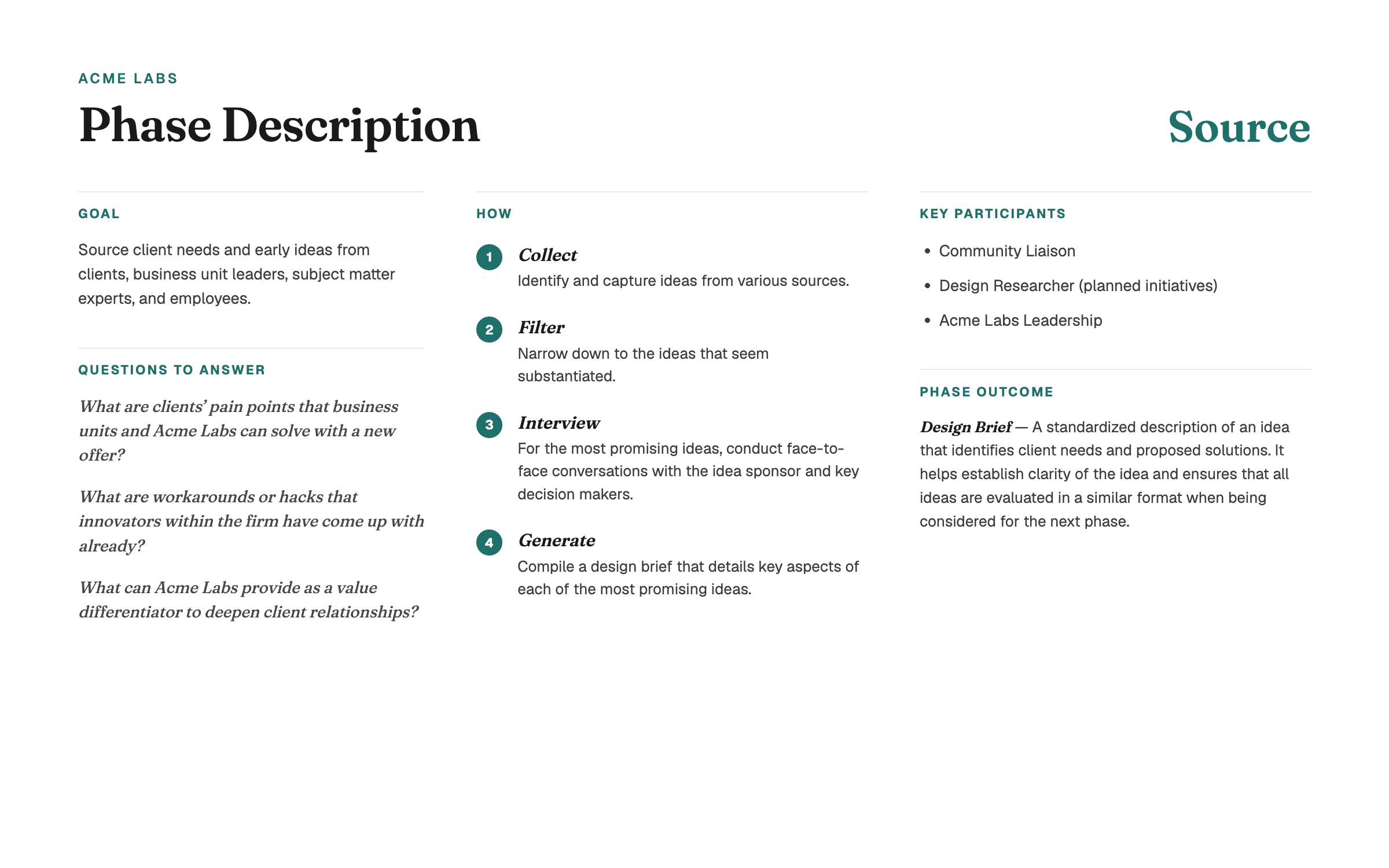
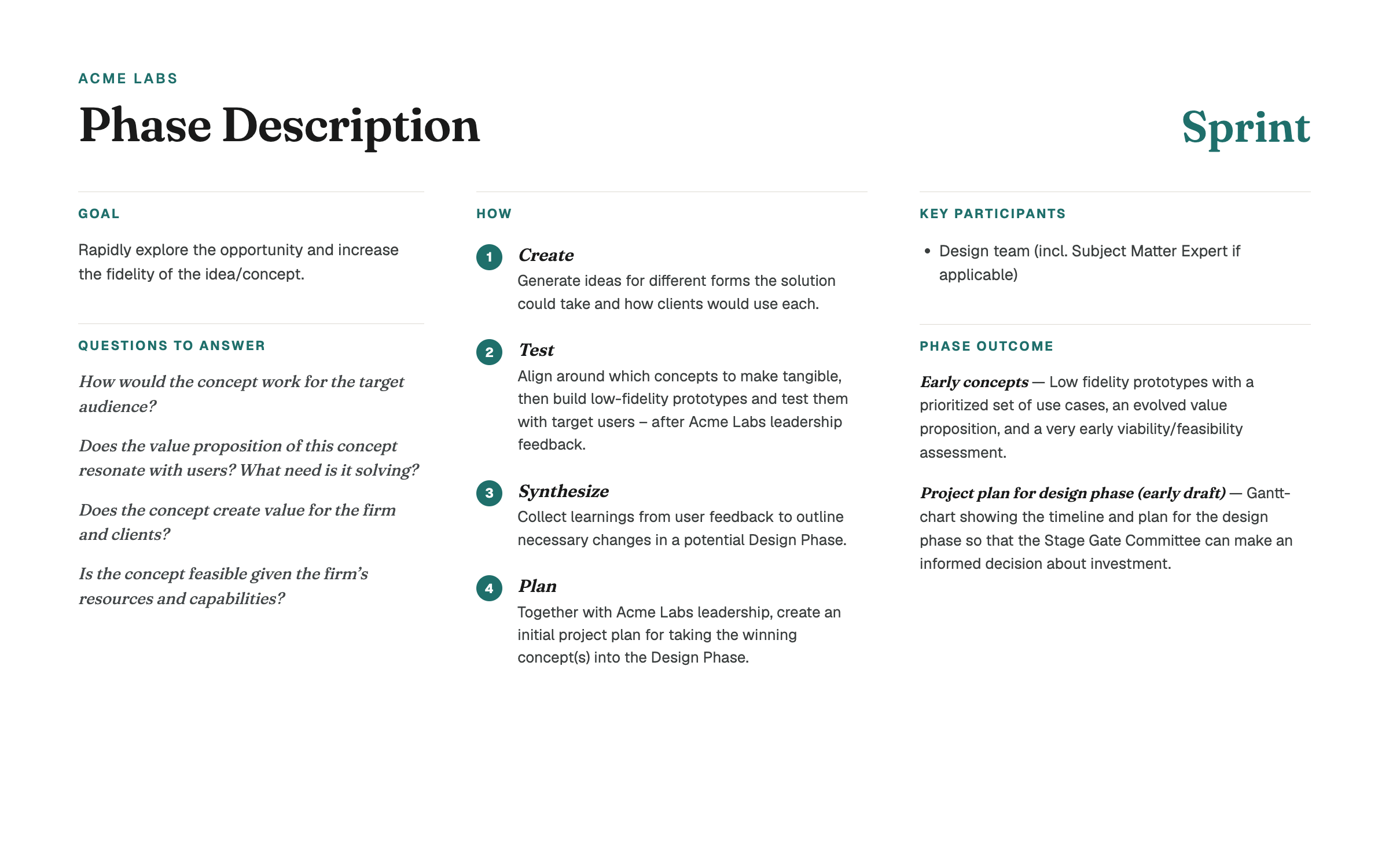
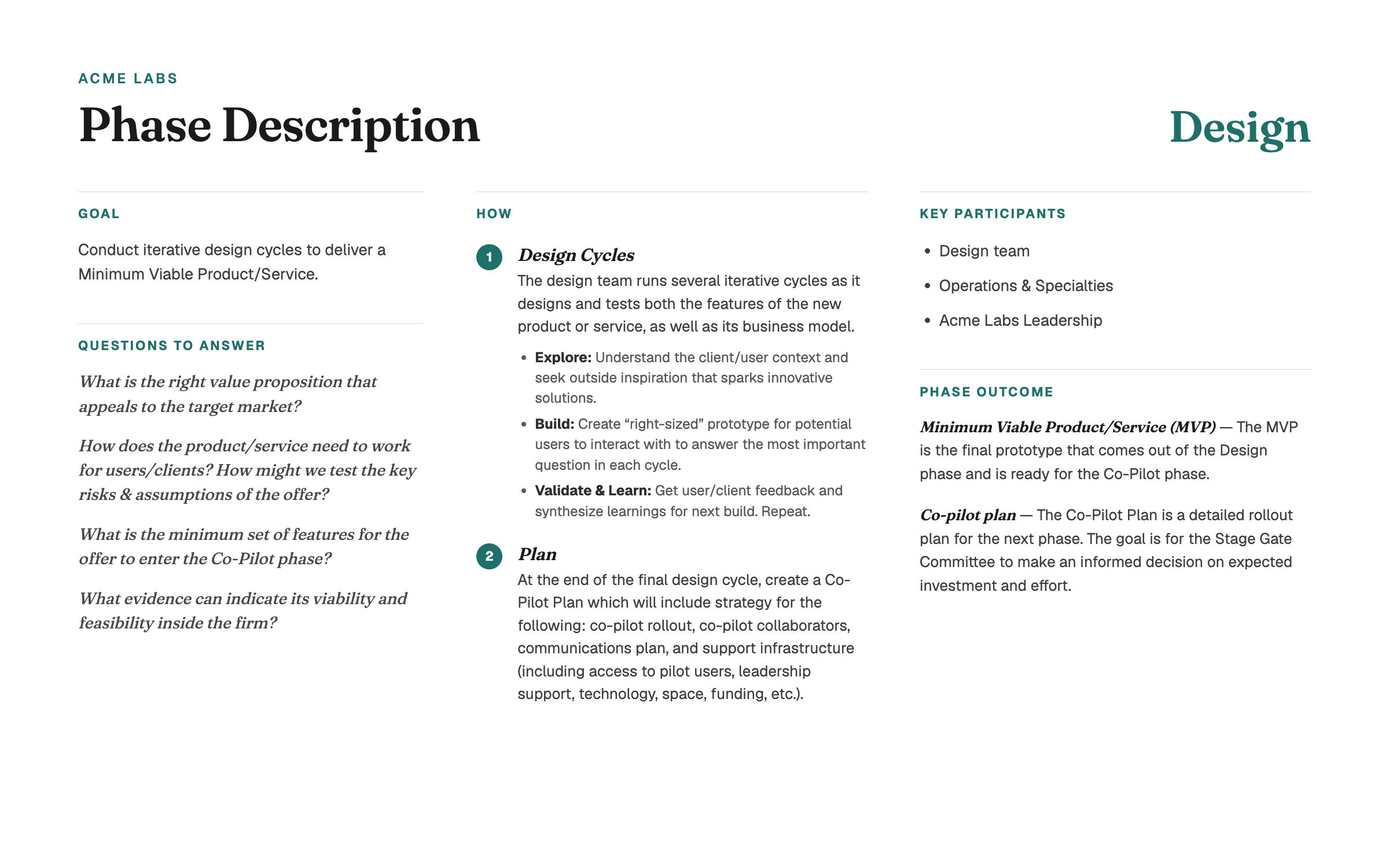
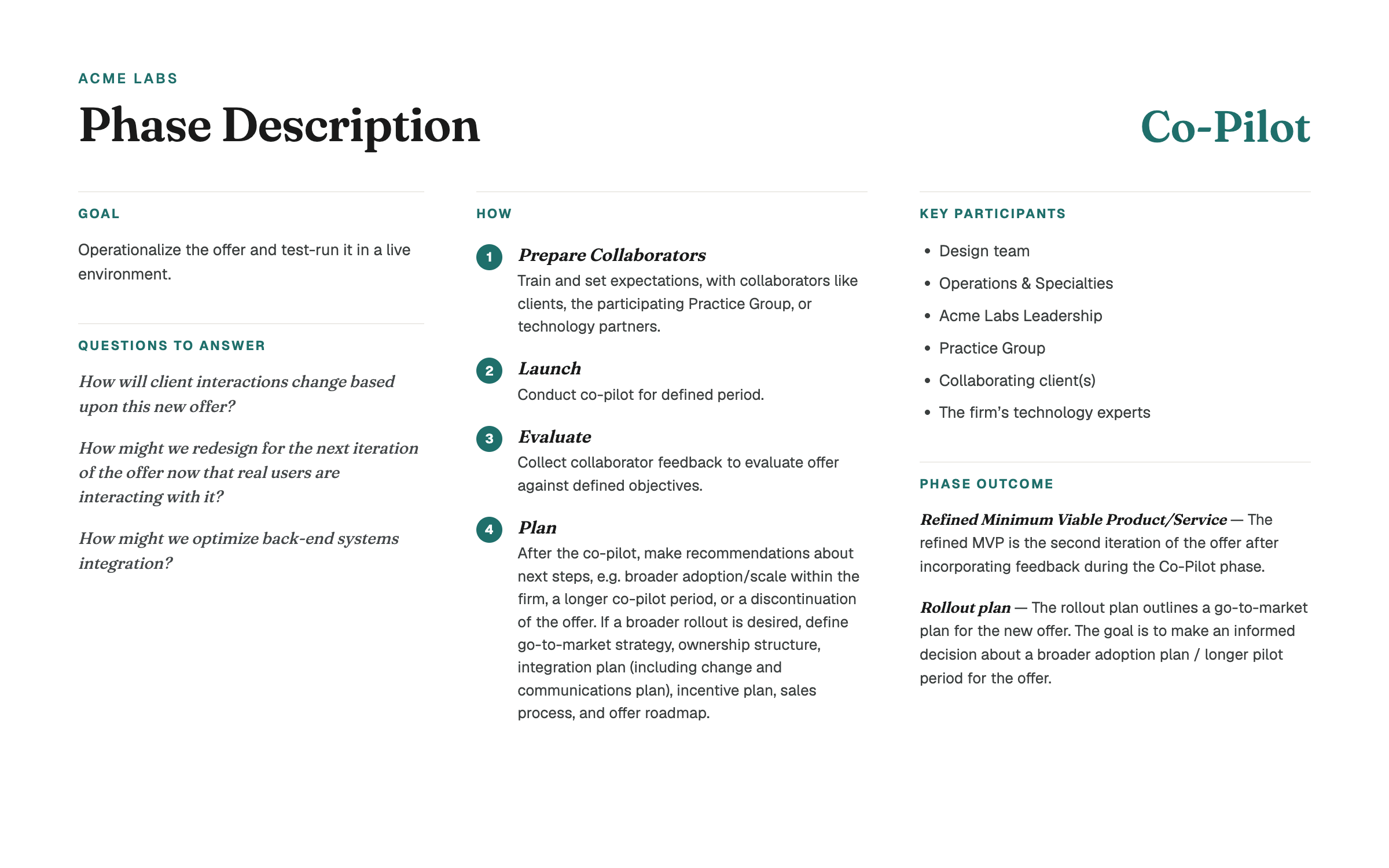
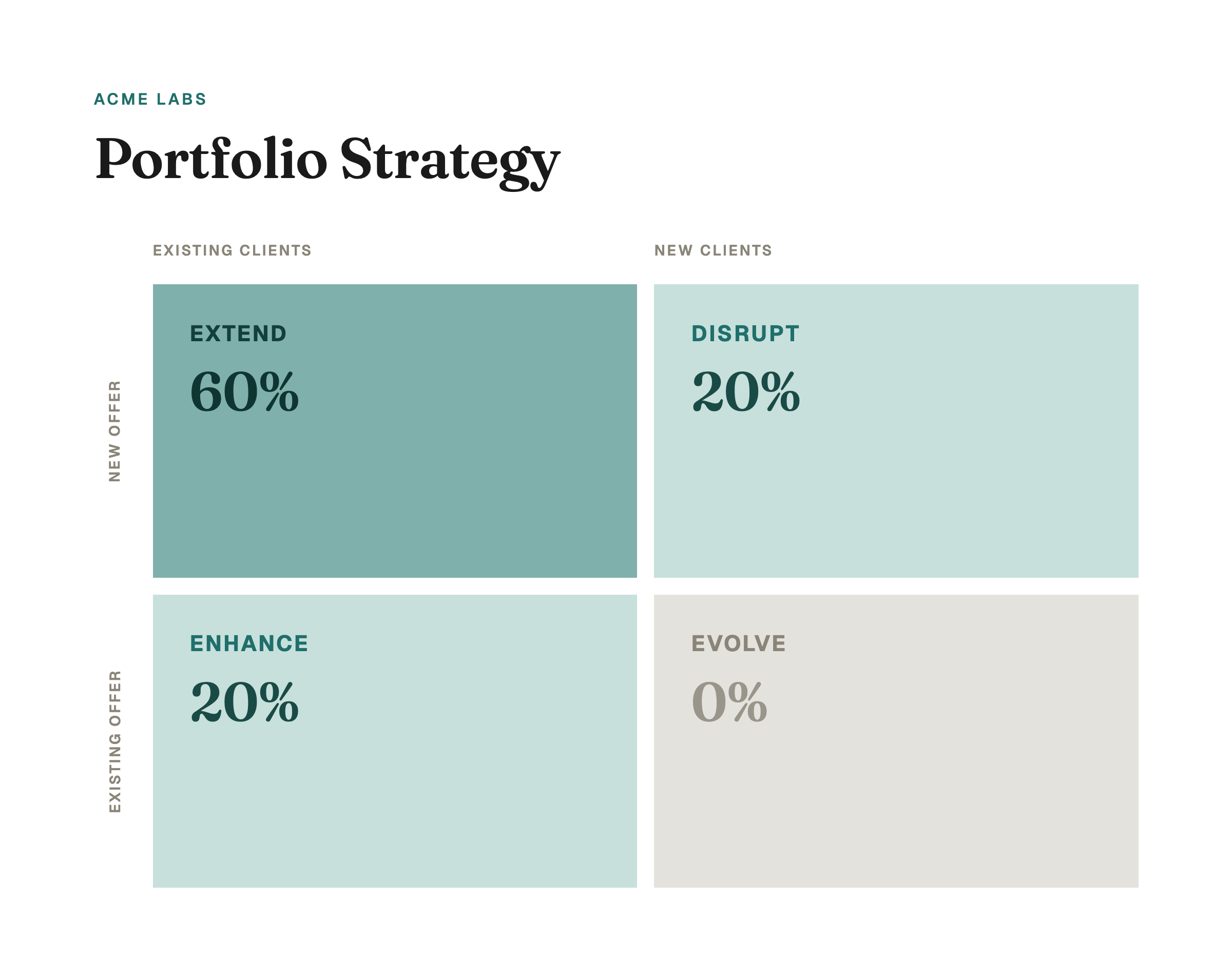
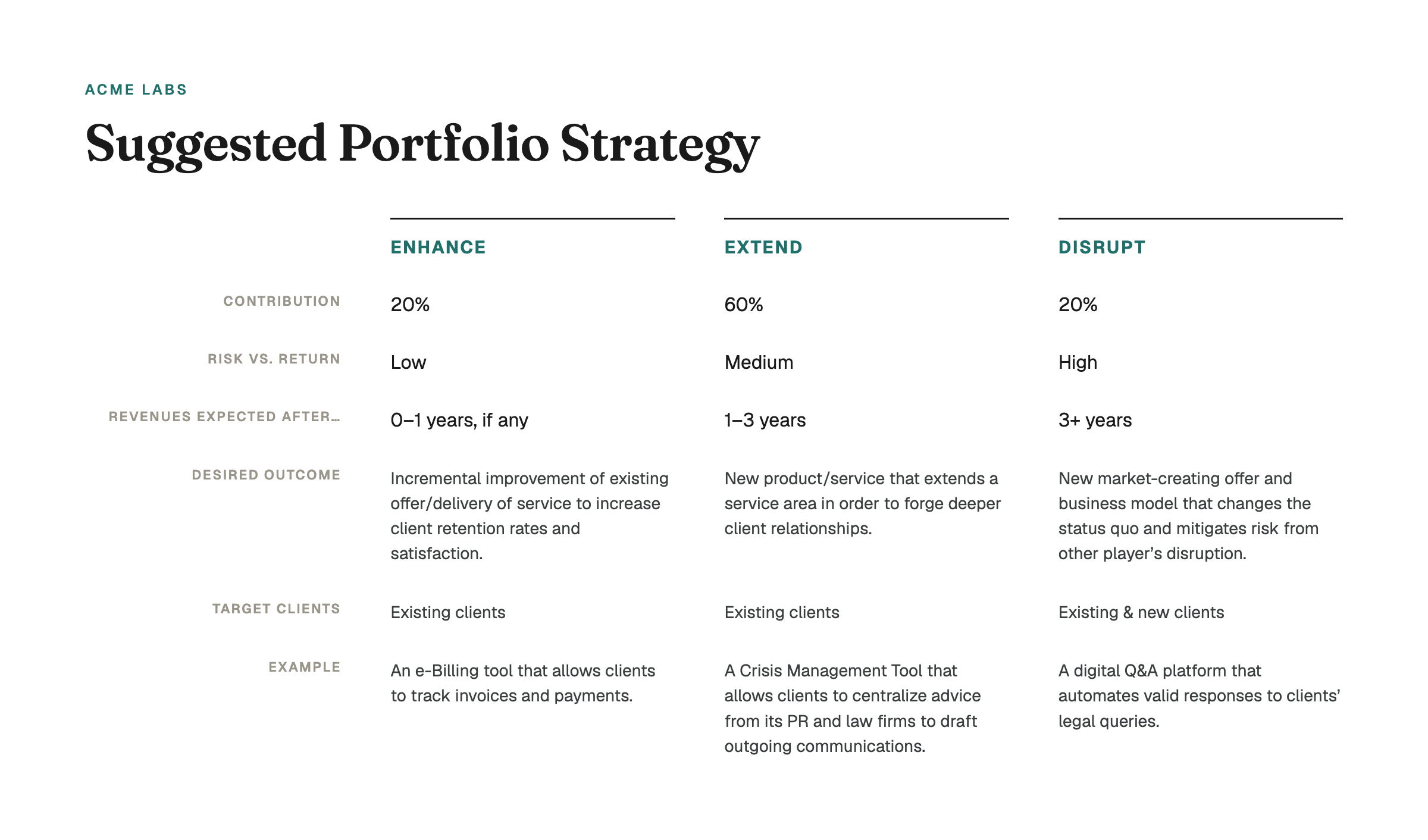
I won the work and led the engagement end to end. I ran an extensive design research sprint with partners, associates, and firm leadership to understand how a lab might efficiently source ideas for new product and service offerings from the firm's lawyers and clients. Our legal innovation team designed the lab's complete operating model: a four-phase stage-gated process (source, sprint, design, co-pilot), a portfolio strategy balancing incremental and disruptive bets, and the blueprint for staffing the lab with a multidisciplinary team composition pairing technical subject matter experts with lawyers seconded in from the firm's practice groups.
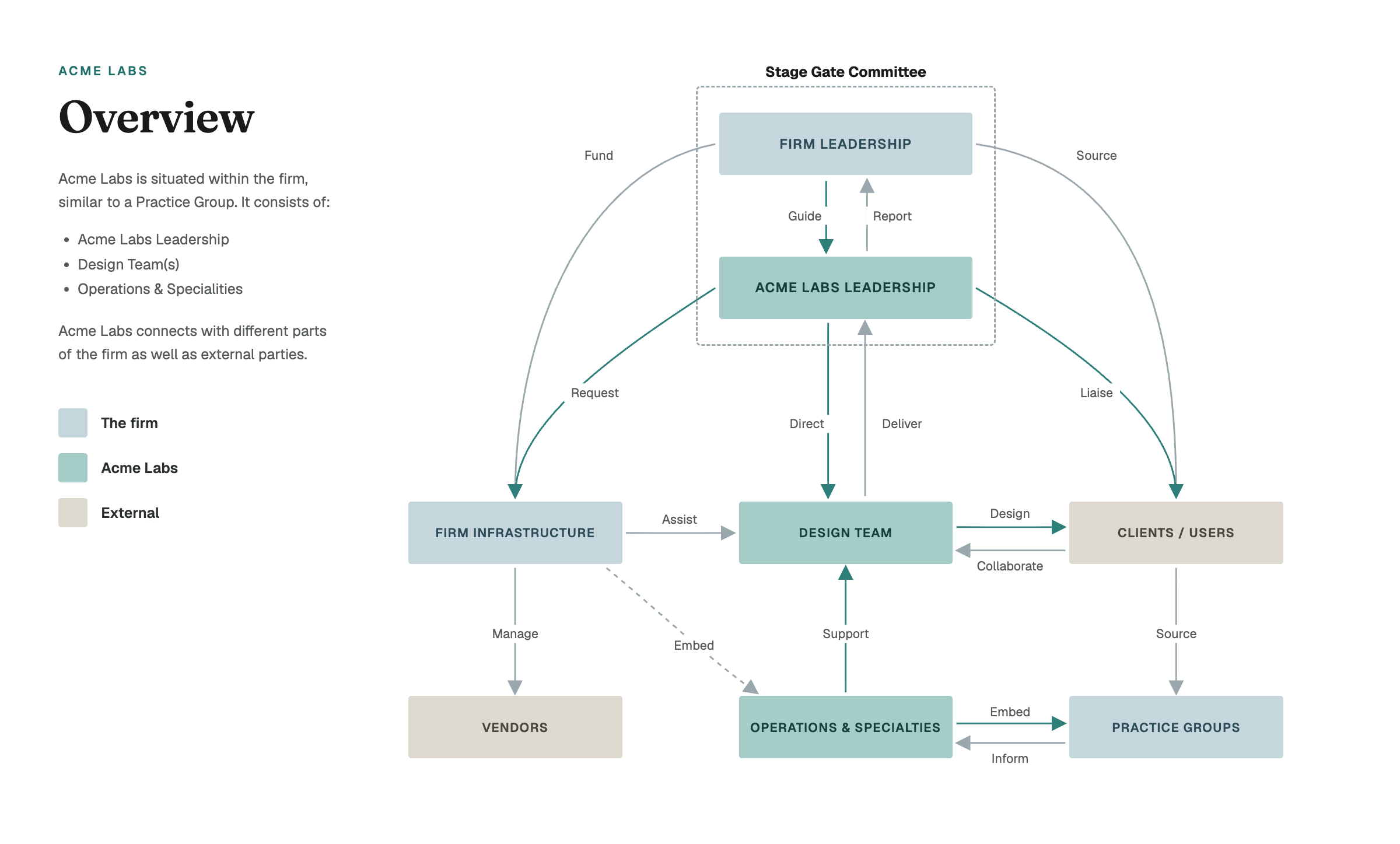
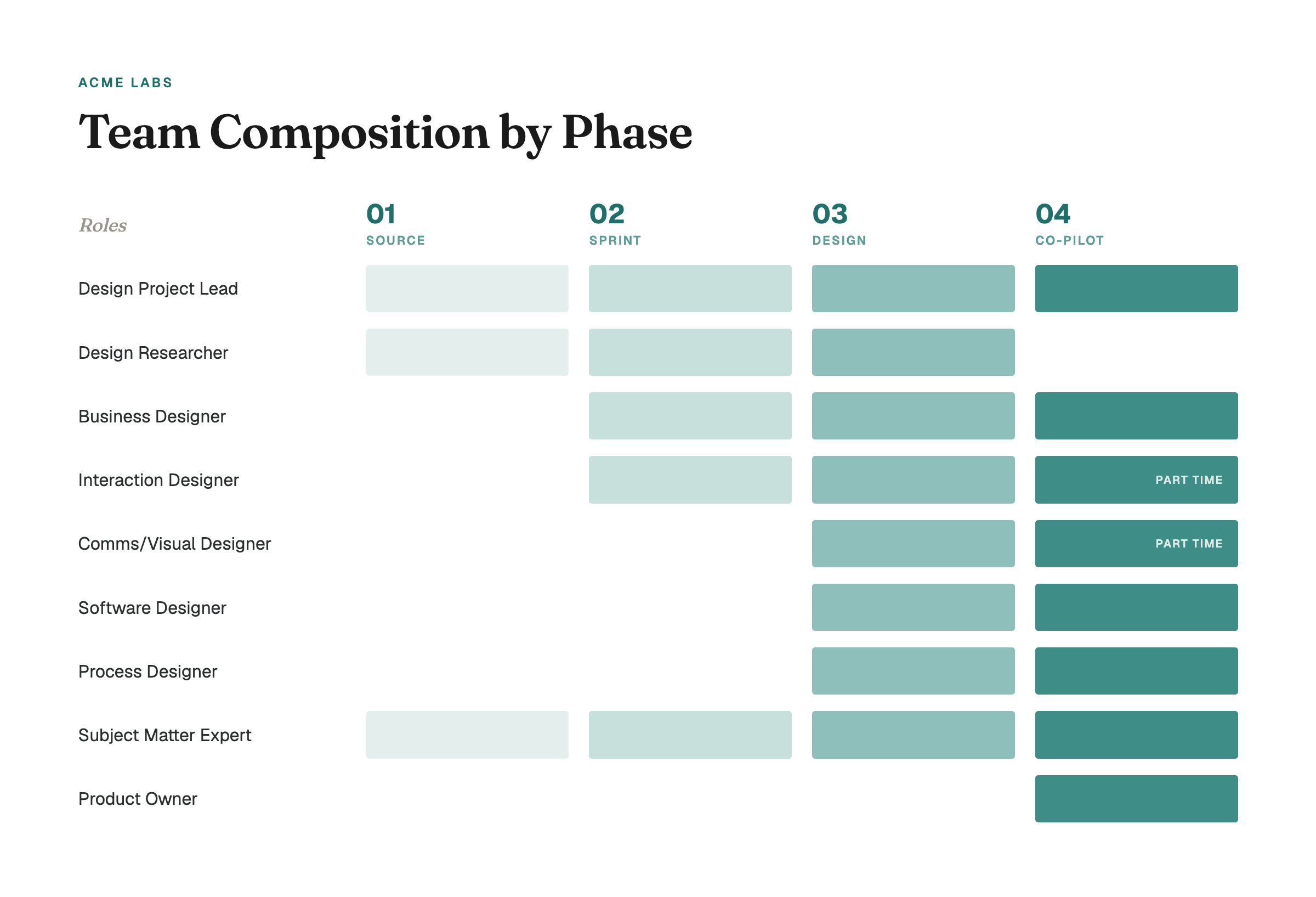
A full operating-model blueprint delivered to firm leadership. Two of the lab's core design principles are particularly relevant in 2026. First, the sourcing mechanism, which used lawyers' existing client relationships and day-to-day work as the input to the innovation funnel rather than parachuting outside tools or researchers into the firm. This meant that the firm could consider some pretty radical shifts to its business model and service offerings, but through a much safer lens. Second, the staffing model for the lab paired technical experts with seconded lawyers as equal contributors. This is essentially the legal-engineer hiring pattern AmLaw firms are now building into AI-native practice.