AI Title & Survey Review Tool.
A working AI tool that reads the dense reports behind a commercial real estate purchase and drafts the attorney's first-pass review.
The system ingests core due-diligence reports for a real estate deal (title commitments, land surveys, zoning reports, etc.), analyzes all documents (including the survey drawings that ordinary software cannot parse), then cross-checks everything to flag any places where there are inconsistencies amongst the due-diligence materials.
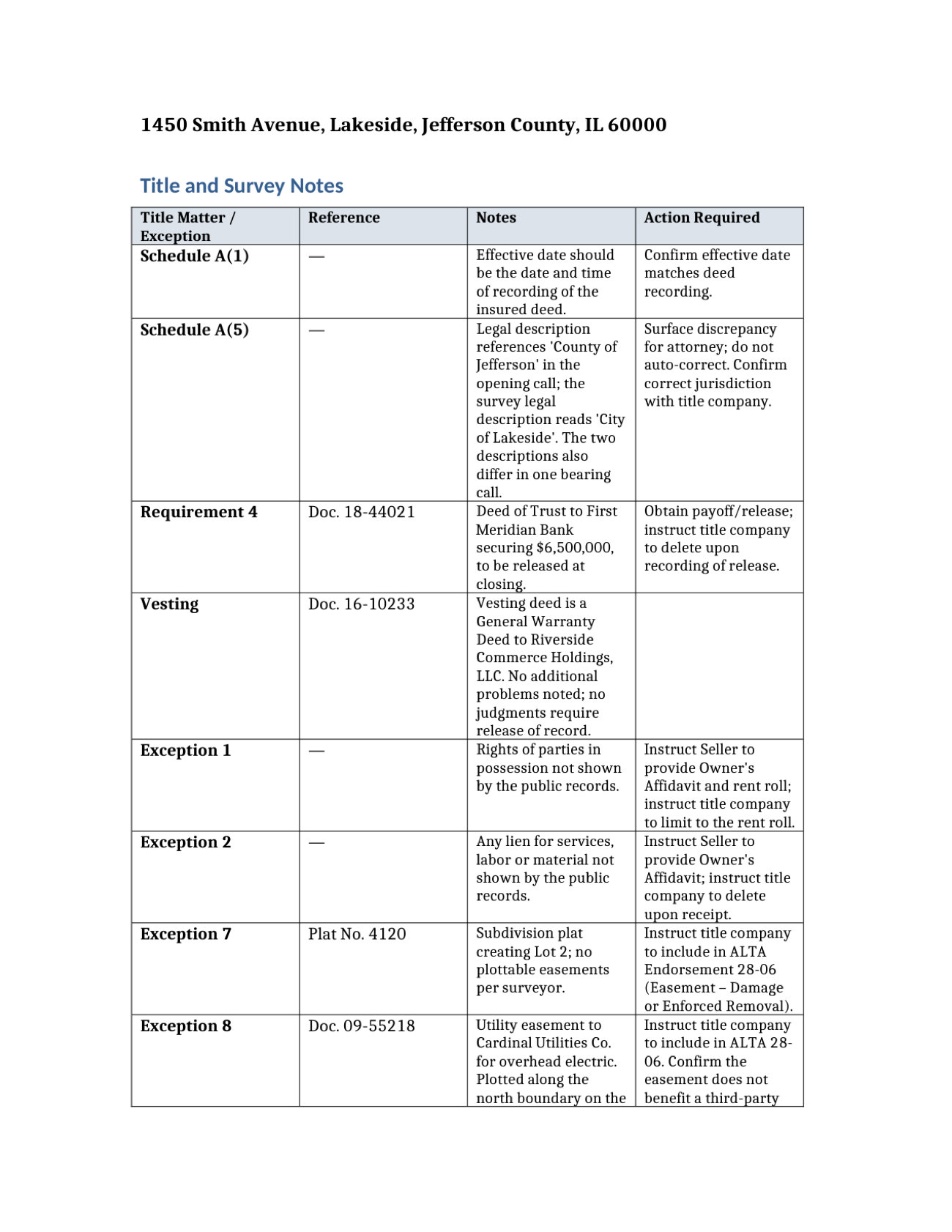
The system then produces a structured review in the firm's own template, grades each finding by how much attention it needs, and links every statement back to the exact page in the primary source document. An attorney reviews and signs off in a secure web app, then exports the finished document into a Word template suitable for shipping to the client.
A collaboration with a boutique real estate law firm. It began as a tool for one narrow review type and, once it proved out, expanded into a broader product for commercial real estate transactions, with plans to scale to other firms.
I designed and built the full pipeline, starting with extensive research interviews with attorneys and paralegals to understand the nuances of their workflows. The first version handled a single, narrow review type: it merged a corpus of recorded documents (deeds, easements, plats, affidavits) via OCR, ran a first-pass structured extraction with Sonnet, then a second-pass quality review with Opus across eight dimensions, and produced an editable workspace plus a Word export in the attorney's preferred format.
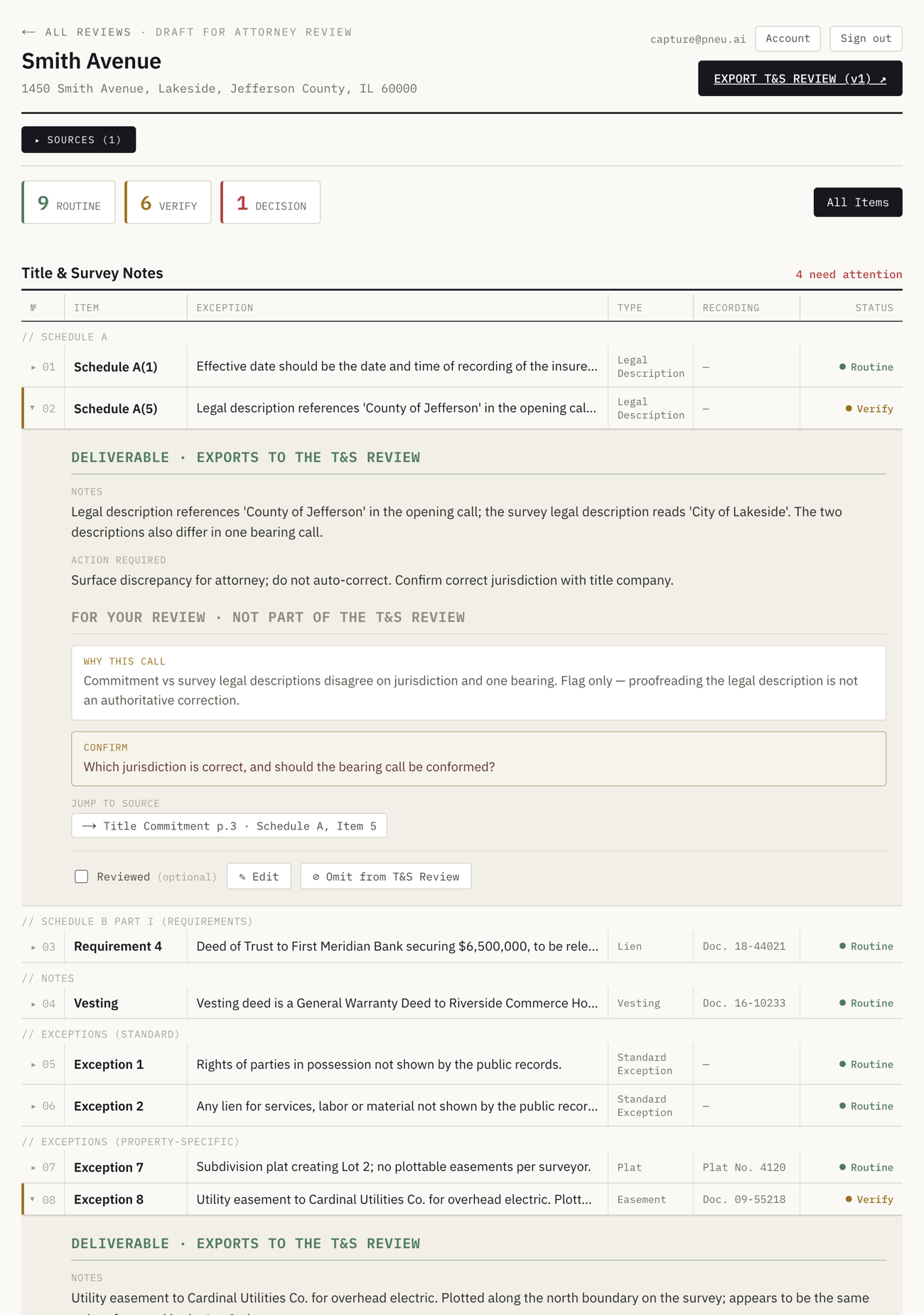
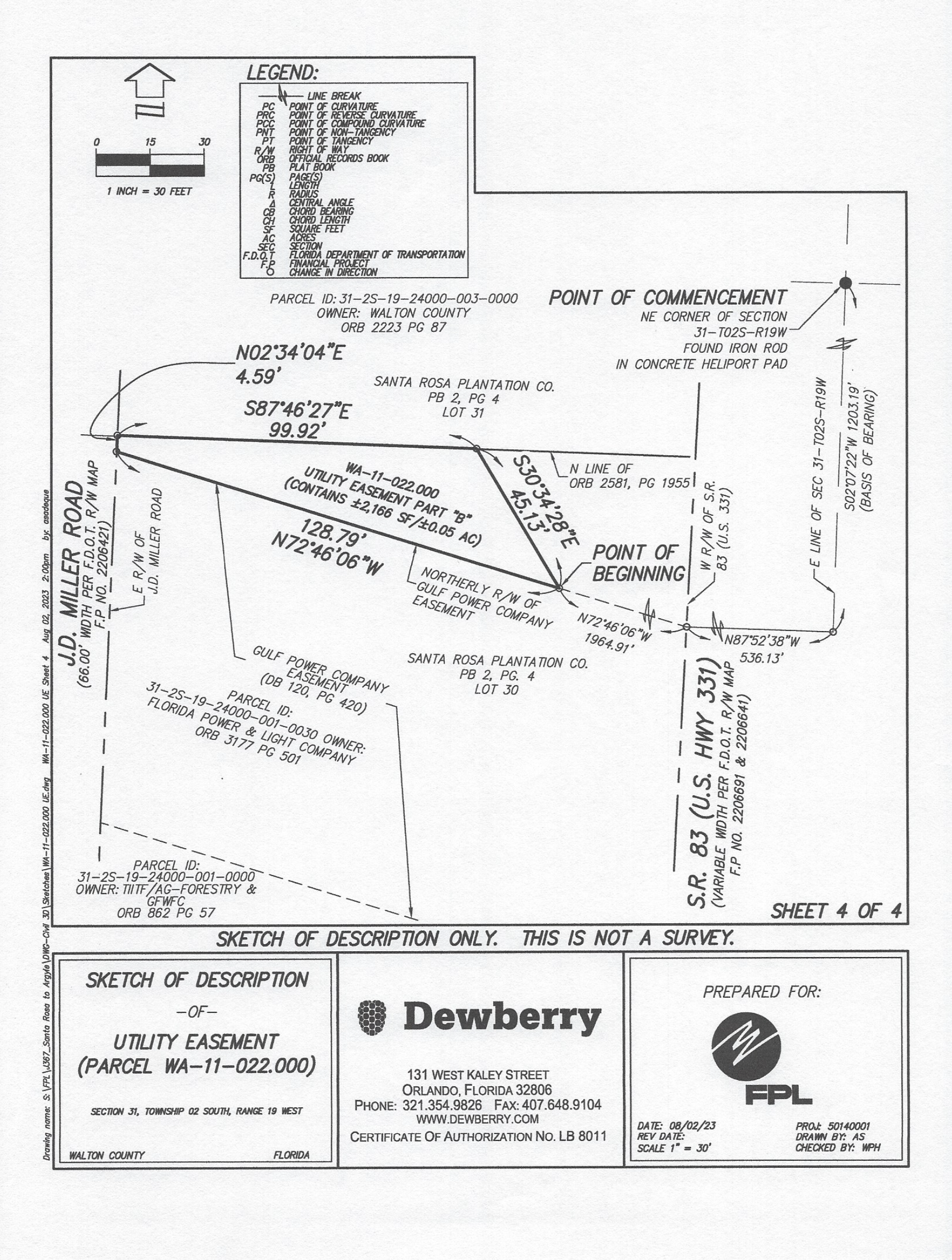
Once that proved out, I expanded it into a far more capable commercial version. It now reads three separate reports per deal (title, survey, and zoning) instead of one. Surveys are the hard part: they are engineering drawings, not text, so the tool tiles each sheet and reads the symbology and surveyor's notes with vision AI. It then reconciles the three reports against each other, flagging, for example, a title exception that the survey does not actually depict on the ground. Every finding is graded on a confidence ladder (routine, verify, or decision) so the attorney's attention lands where the risk is, and each statement records the exact page it was drawn from at the moment of extraction.
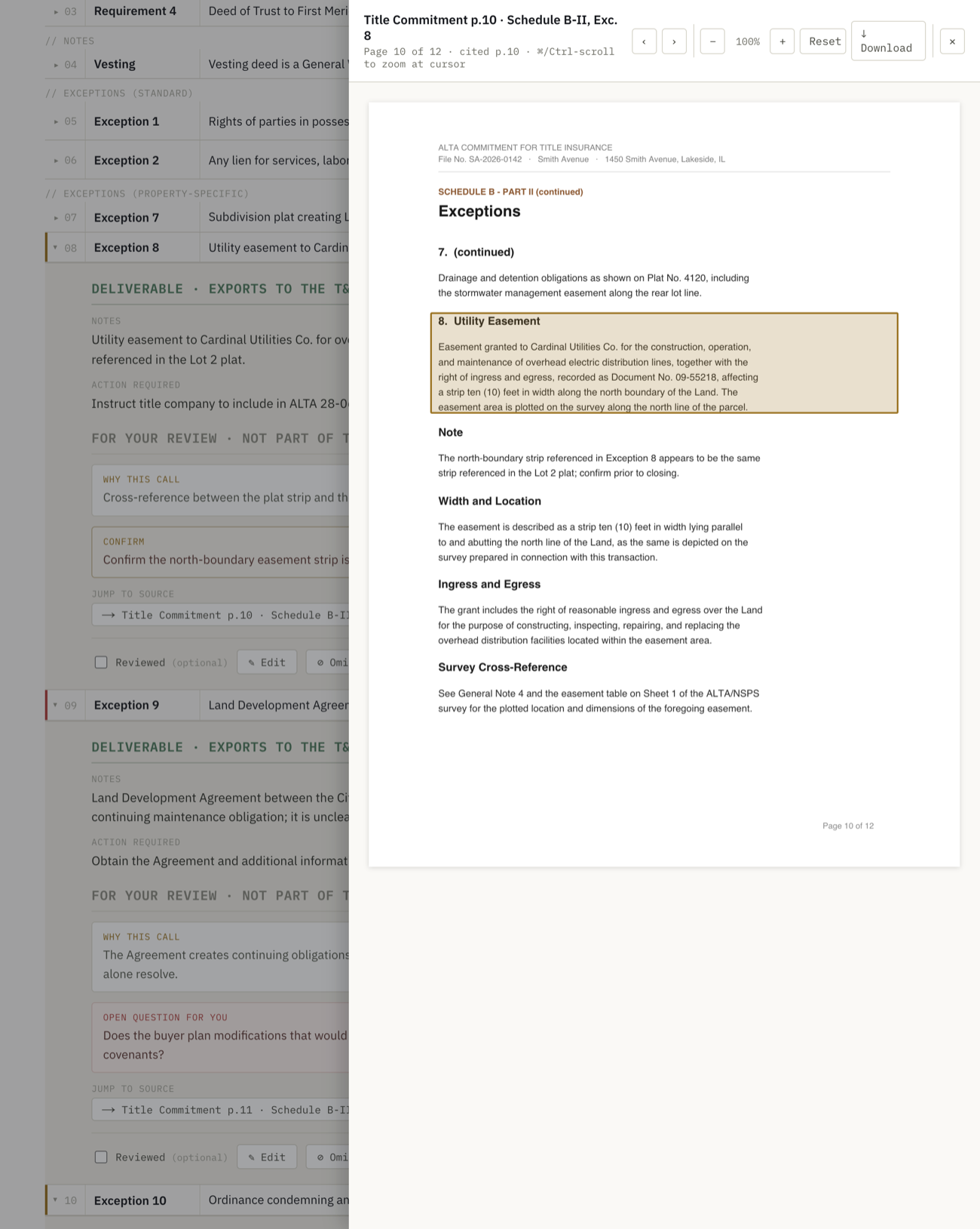
The output is no longer just a document. It is a secure, multi-user web app where the attorney reviews each item alongside the model's reasoning, jumps to the highlighted source page in one click, marks items reviewed or edited, and exports a finished review in the firm's Word template. Login, per-client data isolation, and a private document store keep client material confidential.
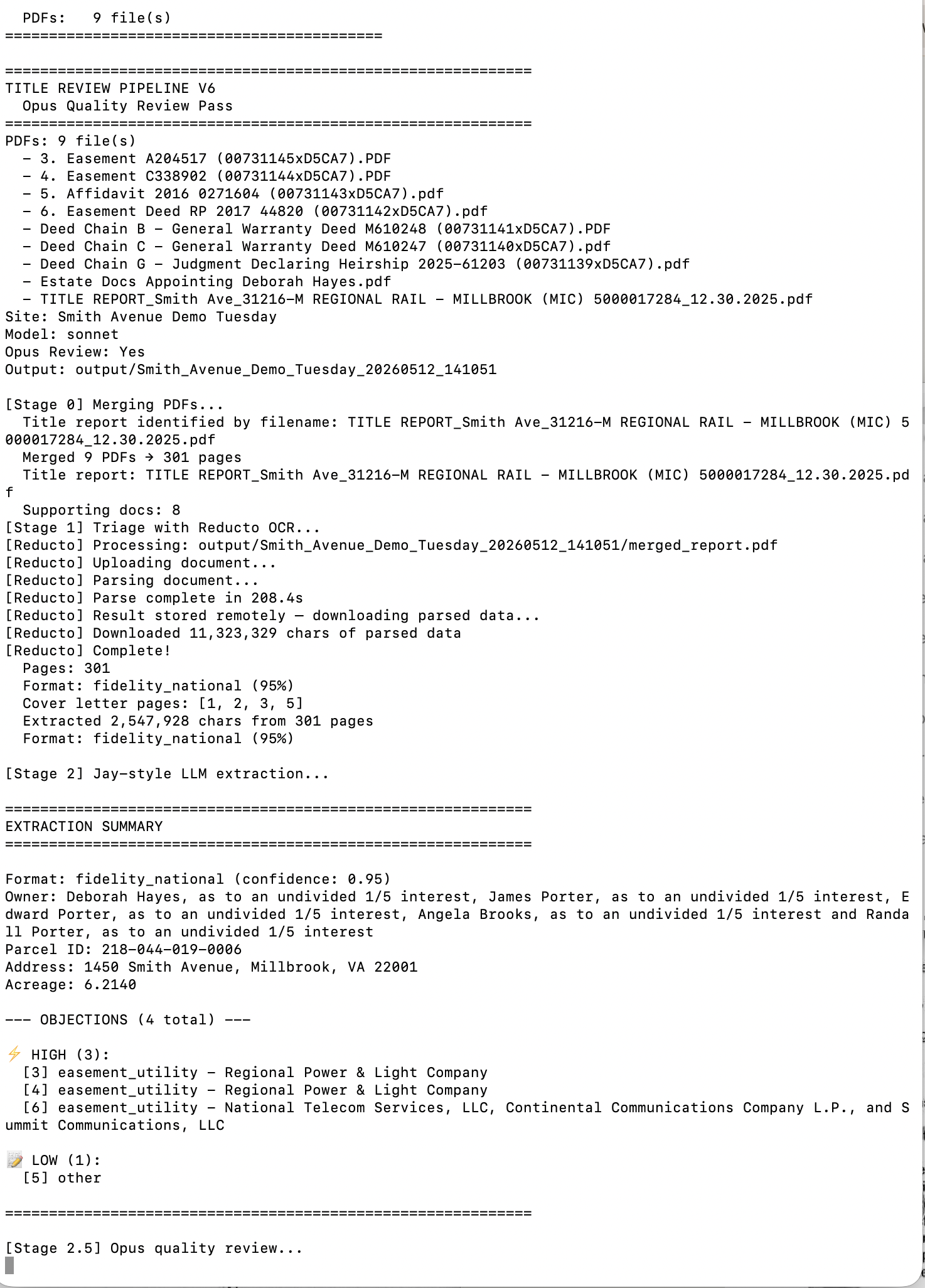
The most important design decision was not trying to replace the attorney. The tool works like a sharp paralegal: it surfaces, summarizes, and cites, and it flags what it is unsure of, but it never renders a legal conclusion or silently rewrites a document. Trust comes from traceability, since every finding is one click from its source. Validated against a practicing attorney's own written review, the tool reproduced the right structure, the right procedural actions, and the subtle judgment calls a careful reviewer would catch, then ran unaided on fresh deals and surfaced genuinely deal-critical items. It is now a live product the firm is testing.