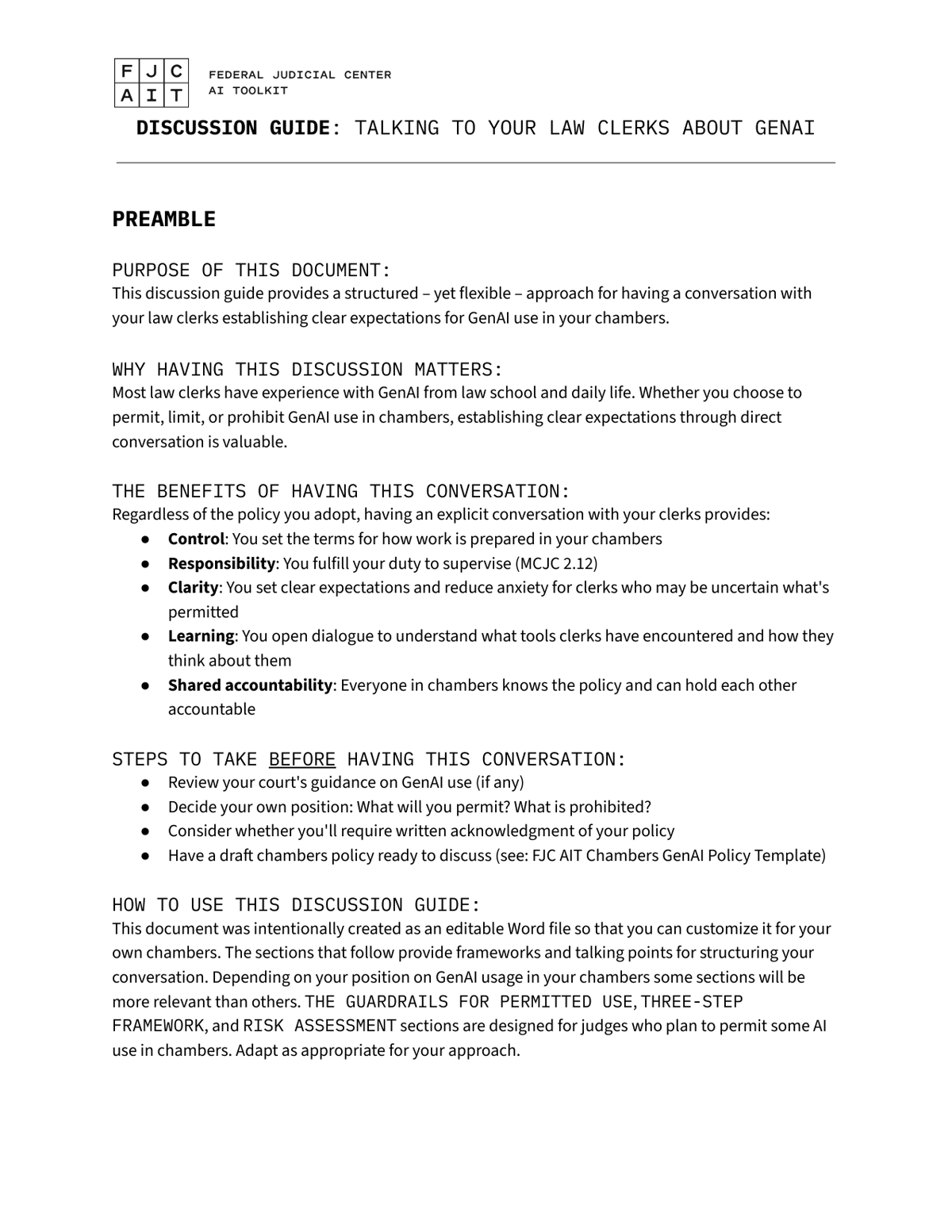
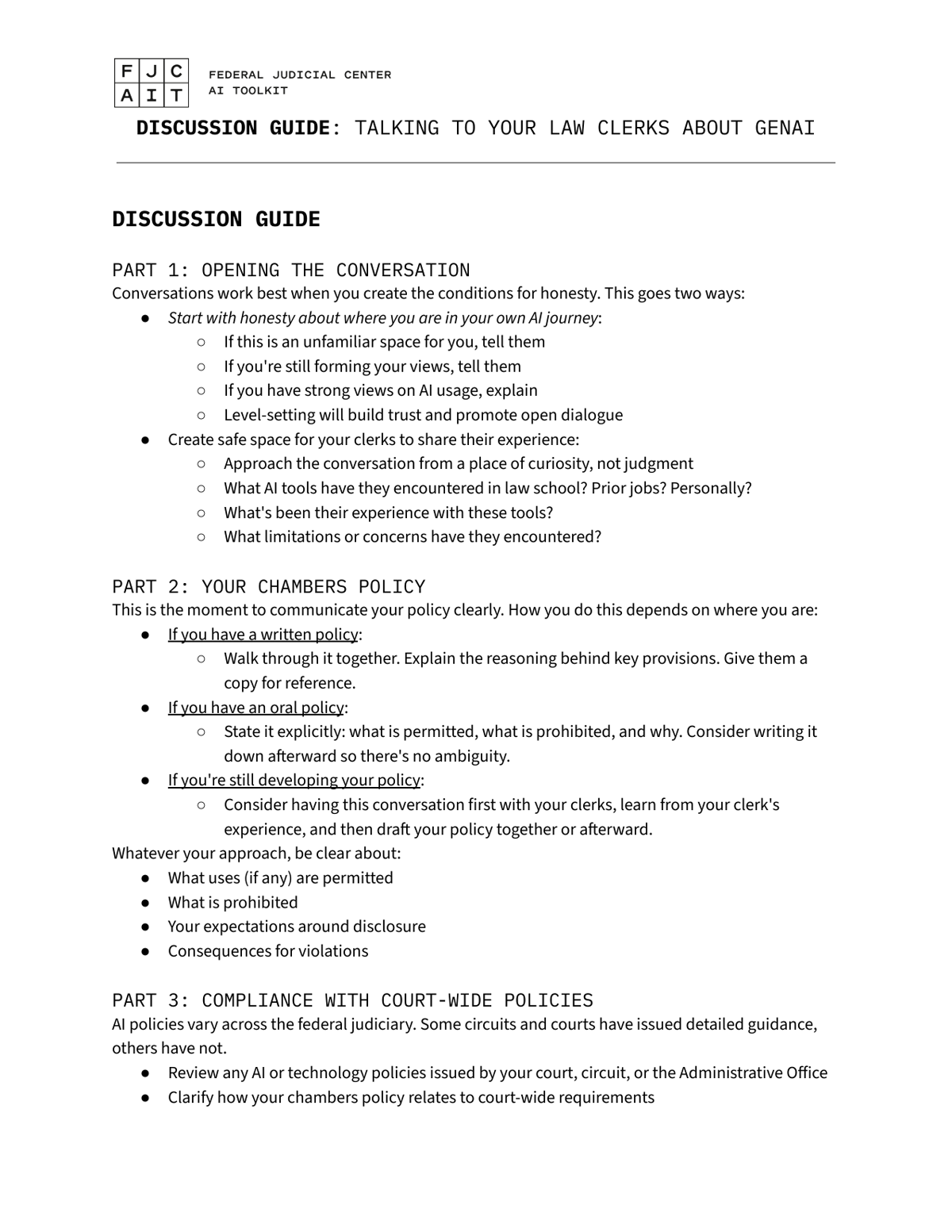
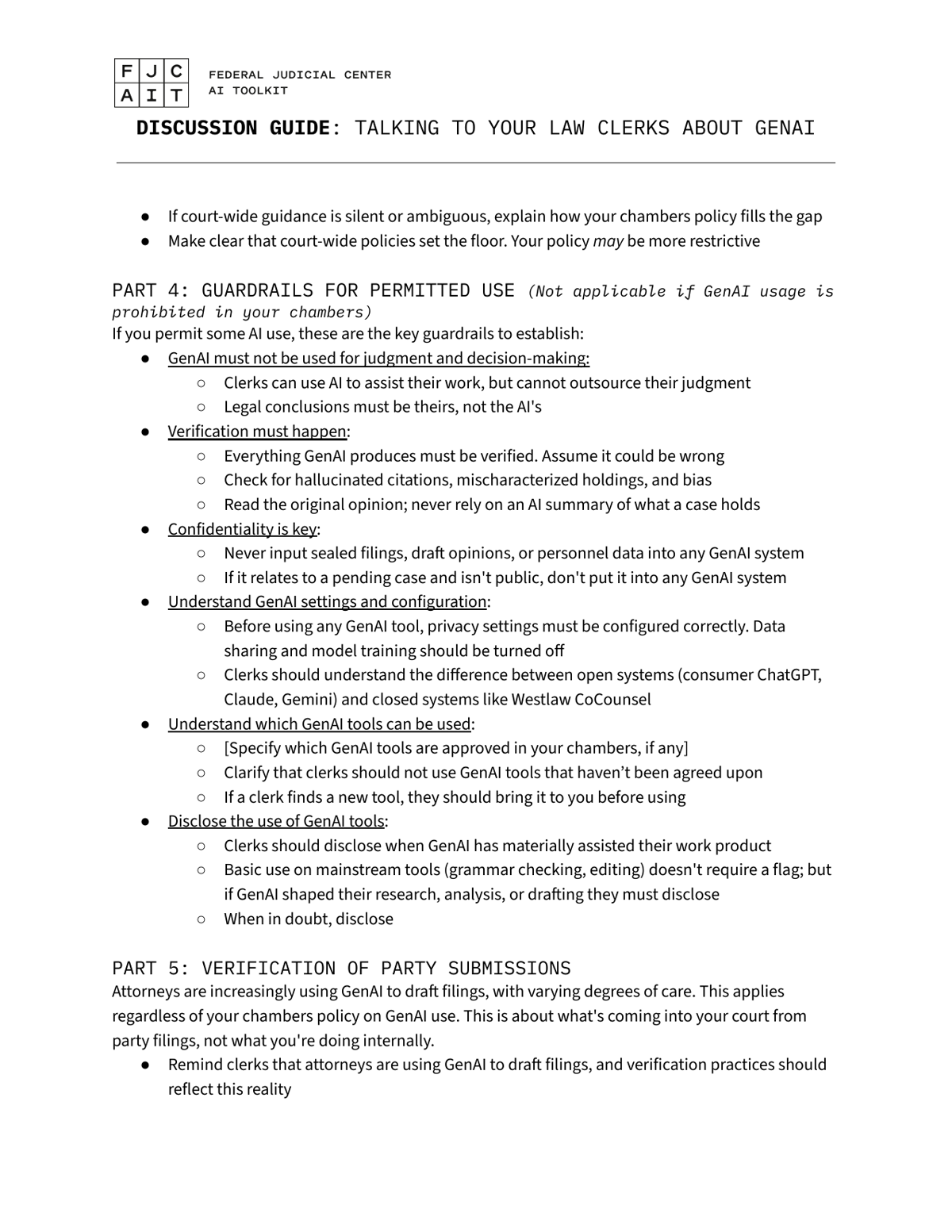
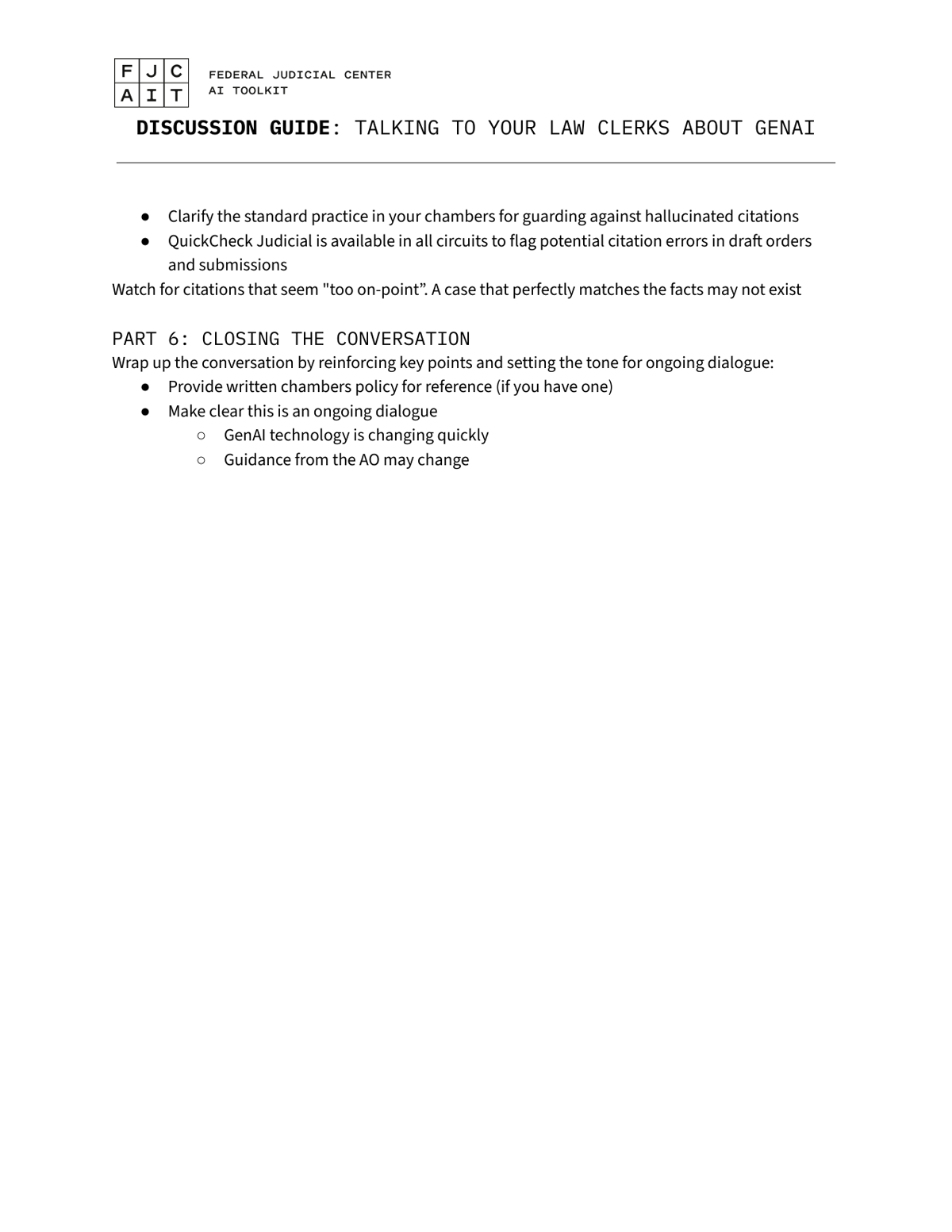
AI Platform for Federal Judges.
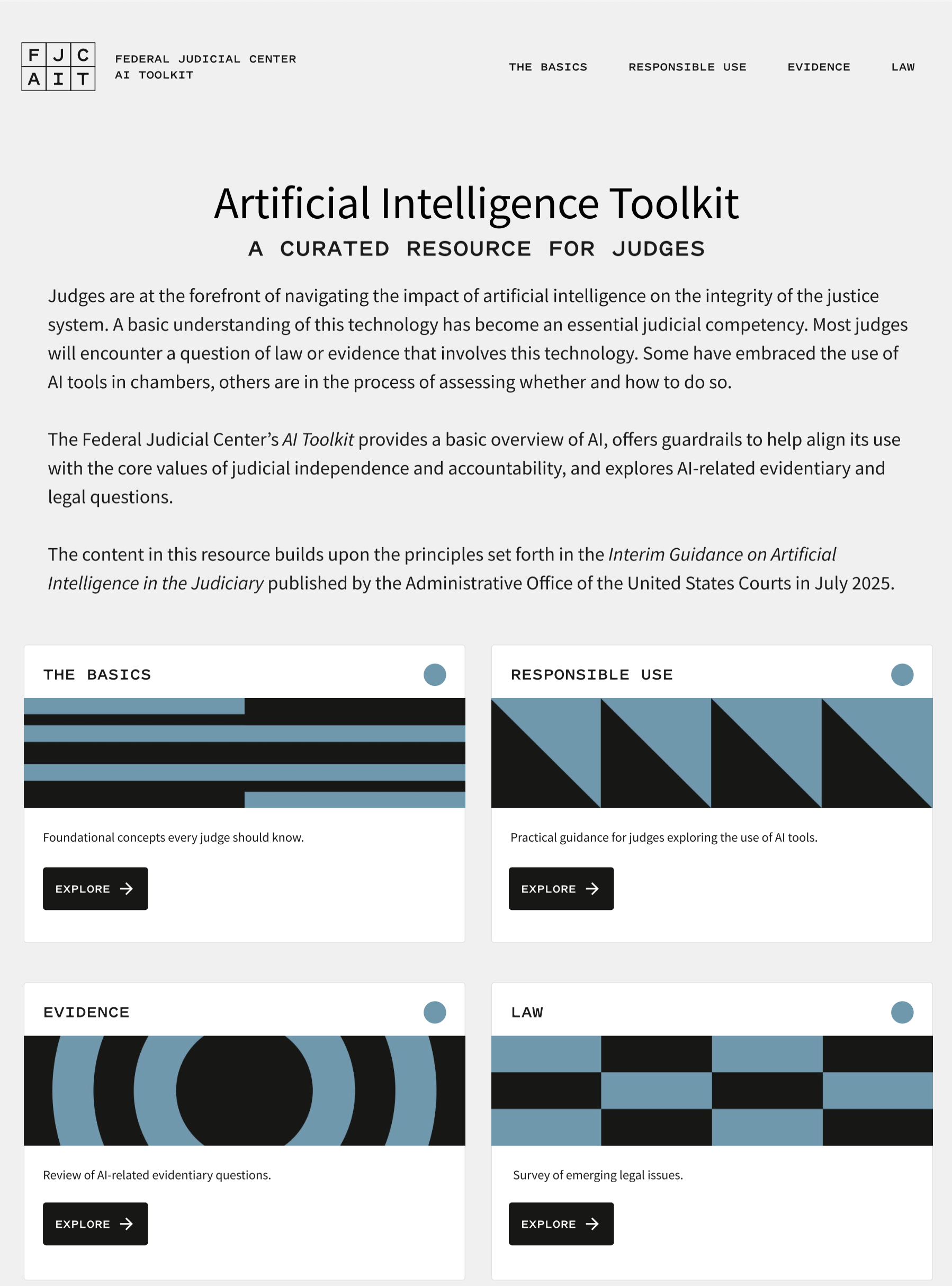
A judge-centered platform which delivers AI training and practical judicial tools to federal judges.
During our extensive research with federal judges, we learned that instead of a comprehensive repository of AI information, judges instead wanted a trusted and concise source for practical information. The platform helps judges get the AI answers they need with clean interfaces and clear links, while avoiding the information overload and confusion found on many government sites. Resources on the platform are practical and actionable, and whenever possible, involve federal judges teaching their peers how to use AI.
The Federal Judicial Center, which is the primary research and education agency of the United States federal court system.
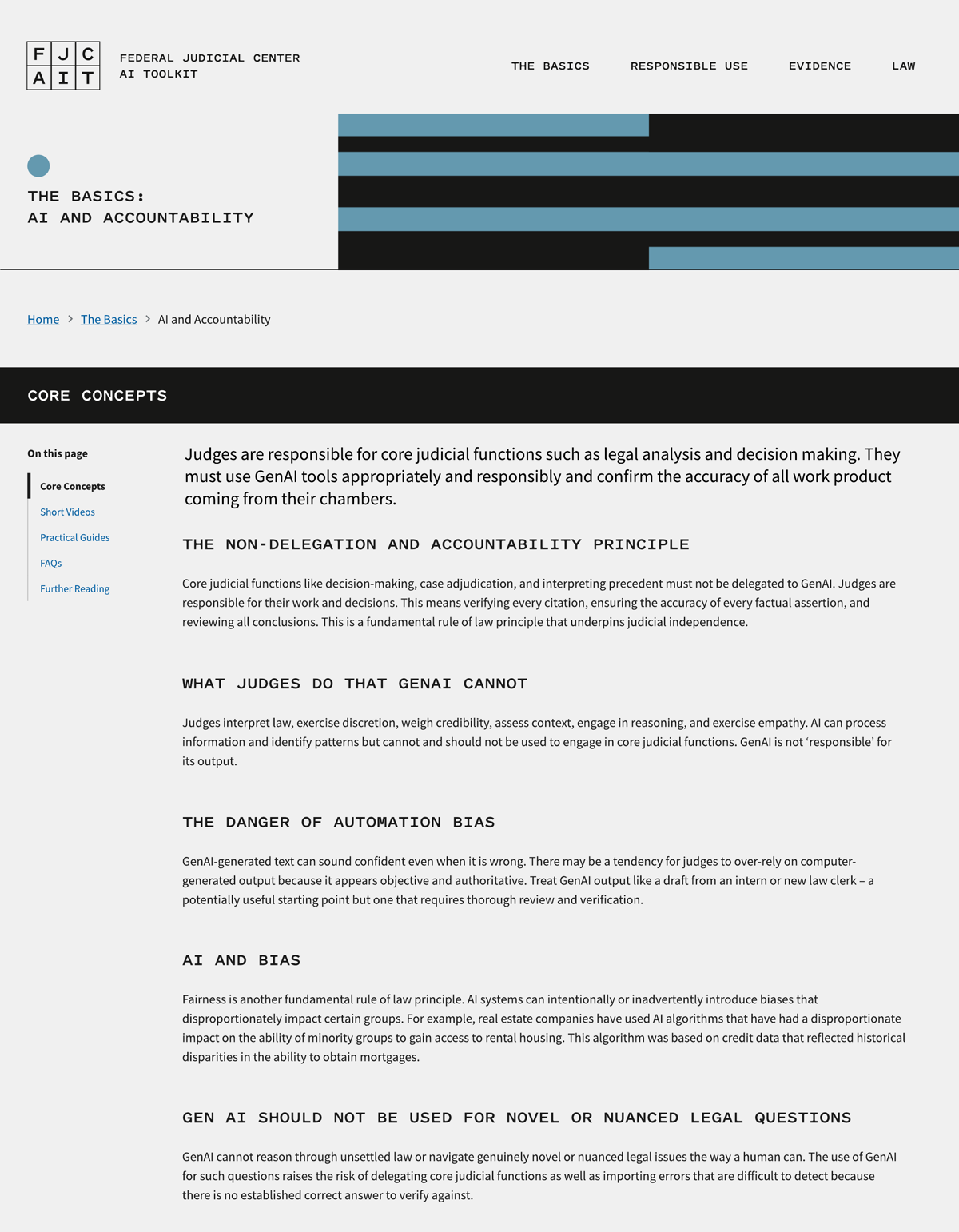
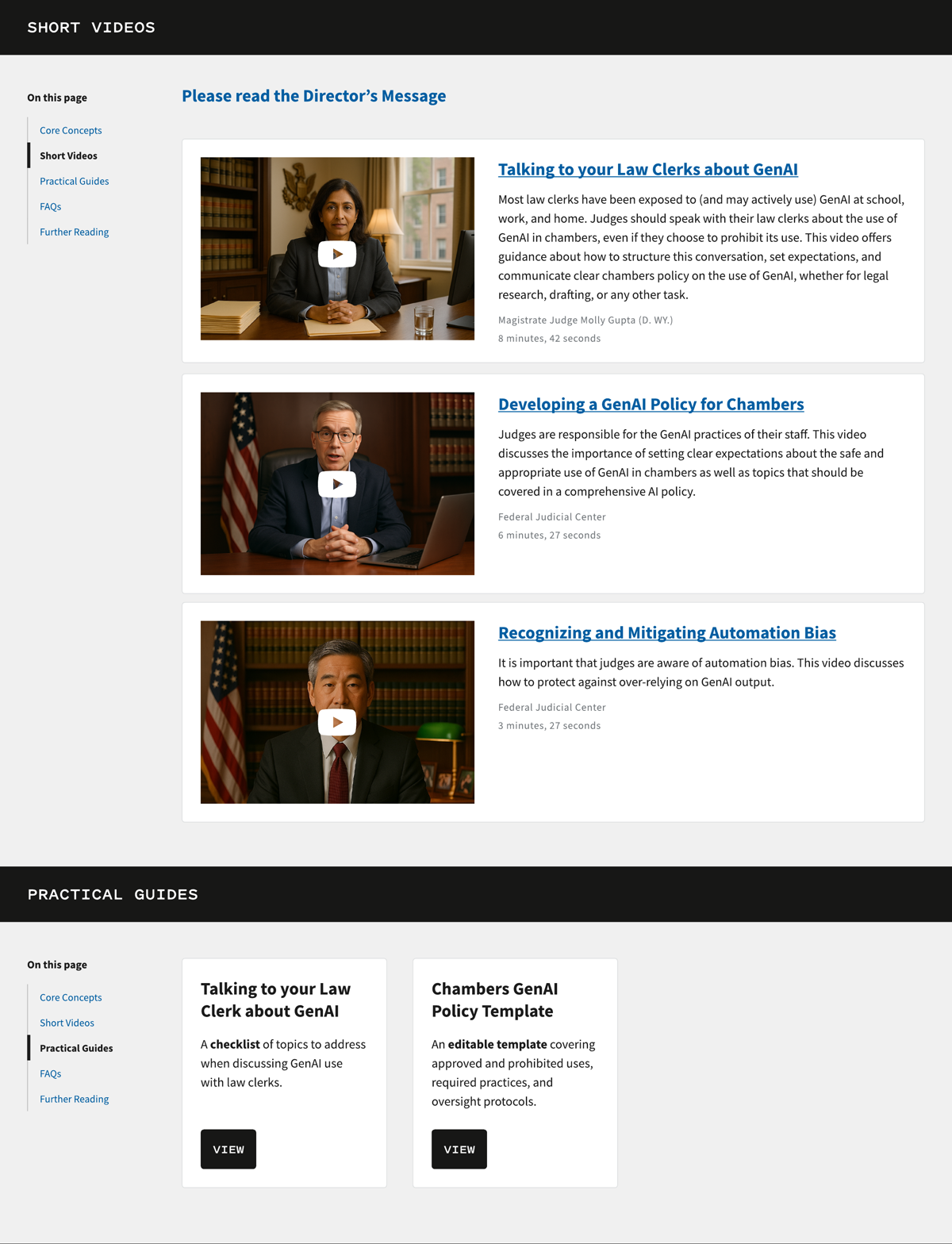
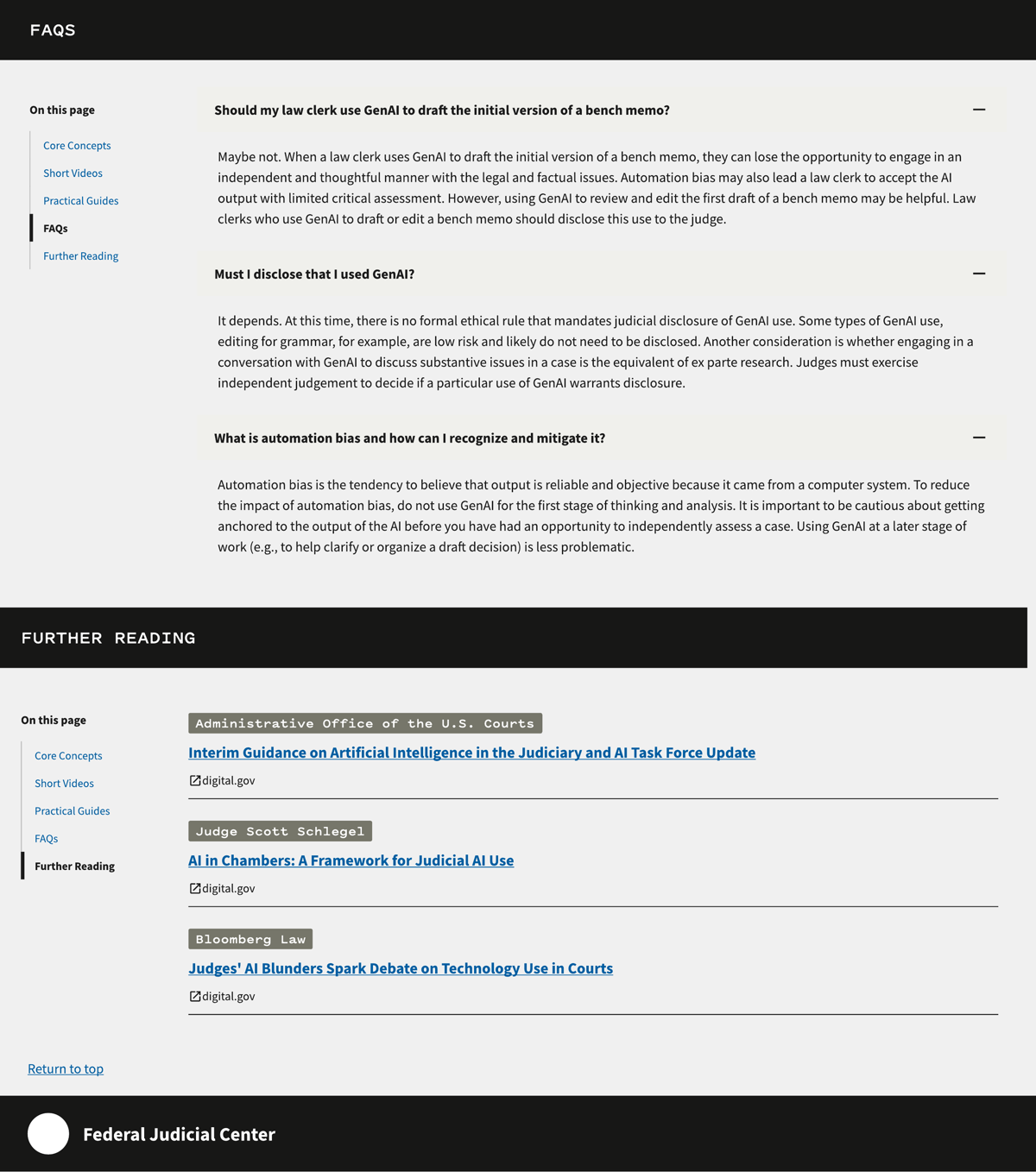
I assembled the team and led the engagement across three phases of work: 1) research with federal judges representing a broad spectrum of AI literacy; 2) designing the AI training curriculum; and 3) building the platform and accompanying AI tools and assets.
The research phase at the outset of the engagement was enormously important. Before we started designing anything, we had to understand federal judges' actual relationship with AI. What tools were they already using? What were their biggest concerns and what type of training or tools might help to overcome these fears? And perhaps most importantly, who did they want to be learning from?
The answer that came back consistently to this last question was this: federal judges wanted to be learning about AI from other federal judges. This meant creating AI teaching content that was for federal judges, by federal judges.
As we entered phase 3 of the project, my team was razor focused on designing a simple and intuitive platform. This task was made a bit more challenging since the federal government still uses Drupal, a content management system that most of the world stopped using back in 2009 or so. At core, we knew we needed to avoid the "information overload" that makes most federal websites extraordinarily difficult to navigate.
A live AI training platform for federal judges. The curriculum centers on three core areas: 1. The ethical use of AI tools, 2. Practical judicial use cases and 3. AI evidence in the courtroom. The AI Toolkit provides practical judicial tools rather than AI theory, containing how-to guides, checklists, and conversation guides that judges can put to use immediately. We used a peer-to-peer format throughout, with short video segments of judges explaining their own AI workflows in their own words. The platform manages to be robust (yet also minimal), judge-centered, and beautiful, containing only what judges actually need.